
 mehul.pattel
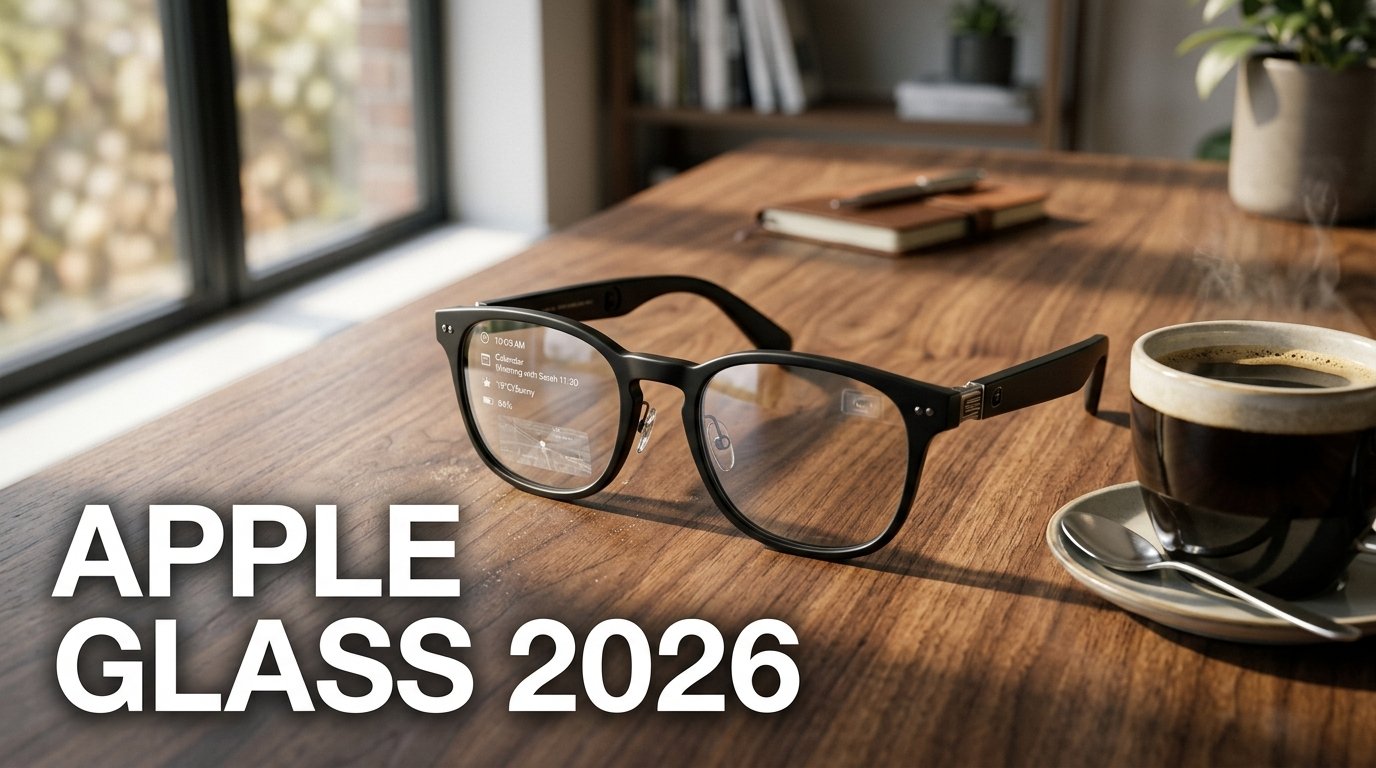
Apple Glass 2026: Is This the Beginning of the End for the iPhone?
For over a decade, the iPhone has been the undisputed king of consumer technology, serving as the central hub for our digital lives. However, the technology landscape is undergoing a monumental shift in 2026. After years of speculation, leaks, and billions of dollars in research and development, Apple has officially unveiled its highly anticipated Apple Glass. This isn’t just another accessory like the Apple Watch; it is a paradigm-shifting device designed to eventually replace the smartphone entirely.
The 2026 launch of Apple Glass marks the true beginning of the augmented reality (AR) era for everyday consumers. Unlike the bulky, isolating VR headsets of the past (including Apple’s own Vision Pro series), Apple Glass looks and feels like a premium pair of designer eyeglasses. But hidden within its sleek titanium frames is technology that promises to seamlessly blend the digital world with our physical reality.
The Hardware: A Masterpiece of Miniaturization
The biggest hurdle in AR technology has always been shrinking powerful computing hardware into a form factor that normal people would actually want to wear in public. With the 2026 Apple Glass, Apple has achieved a masterclass in miniaturization.
The frames are constructed from a custom aerospace-grade titanium alloy, making them incredibly lightweight—weighing only slightly more than a standard pair of Ray-Bans. The lenses utilize advanced micro-LED holographic displays that project crisp, high-resolution information directly into the wearer’s field of view without obstructing their natural sight. The device is powered by the all-new “R2” spatial computing chip, which operates with unprecedented thermal efficiency, ensuring the glasses never get uncomfortably warm.
How It Changes Daily Life
Apple Glass is not designed to trap you in a virtual world; it is designed to enhance the real one. By projecting context-aware information onto your surroundings, it fundamentally changes how you interact with data, navigation, and other people.
1. Seamless Navigation
Imagine walking down a busy city street and seeing subtle, blue glowing arrows painted directly onto the sidewalk guiding you to your destination. Apple Maps has been completely overhauled for Apple Glass, providing turn-by-turn walking directions that exist in 3D space. You no longer need to look down at a screen while crossing the street.
2. Contextual Information and AI Integration
Thanks to deep integration with the upgraded Siri 2.0 (powered by Apple’s on-device LLM), the glasses understand what you are looking at. If you look at a restaurant, you might see its Yelp rating and menu hovering next to the door. If you receive a text message, it discreetly appears in the corner of your eye, and you can reply simply by thinking about the response or using subtle micro-gestures with your fingers, tracked by the built-in LiDAR sensors.
3. The Ultimate Productivity Tool
For professionals, Apple Glass offers an infinite workspace. You can virtually project multiple Mac displays around your physical desk. You can participate in a FaceTime call where the other person appears as a life-sized, photorealistic spatial avatar sitting across from you. The need for physical monitors is rapidly becoming obsolete.
Will It Actually Replace the iPhone?
This is the trillion-dollar question. In 2026, Apple Glass still relies on the iPhone for heavy processing and cellular connectivity. It acts as a powerful companion device, much like the early generations of the Apple Watch.
However, Apple’s long-term strategy is clear. Over the next 3 to 5 years, as battery technology and cellular modems continue to shrink, the glasses will become completely untethered. Why pull a glowing rectangle out of your pocket to check a notification, take a photo, or read an email when that information can be seamlessly integrated into your natural vision? The smartphone era is peaking, and the spatial computing era has officially begun.
Conclusion
The launch of Apple Glass in 2026 is a watershed moment in technology, comparable to the launch of the original iPhone in 2007. While it is currently an expensive, first-generation product primarily aimed at early adopters and tech enthusiasts, its potential is undeniable. It represents a fundamental shift in human-computer interaction, moving us away from looking down at screens and bringing our heads back up to interact with the world around us. The transition won’t happen overnight, but the blueprint for a post-smartphone future is now clearly visible through the lenses of Apple Glass.
Frequently Asked Questions (FAQs)
Q1: Do I need an iPhone to use Apple Glass?
A: Yes. For the 2026 first-generation model, an iPhone 15 or newer is required for initial setup, cellular connectivity, and offloading heavy computational tasks. It operates as a highly advanced companion device.
Q2: What is the battery life like?
A: Apple claims up to 14 hours of “mixed usage” on a single charge. The glasses come with a sleek, wireless charging case (similar to AirPods) that can provide an additional 24 hours of battery life while on the go.
Q3: Can people with prescription glasses use them?
A: Yes. Apple has partnered with Zeiss to offer custom prescription inserts that magnetically attach to the inner frame of the Apple Glass, ensuring perfect vision and AR tracking for all users.
Q4: Is there a privacy concern with the built-in cameras?
A: Apple has emphasized privacy as a core feature. The glasses do not constantly record video. Instead, the LiDAR and optical sensors process environmental data entirely on-device to map the surroundings. When the camera is actively taking a spatial photo or video, a bright LED indicator on the front of the frame illuminates to alert bystanders.