
 mehul.pattel
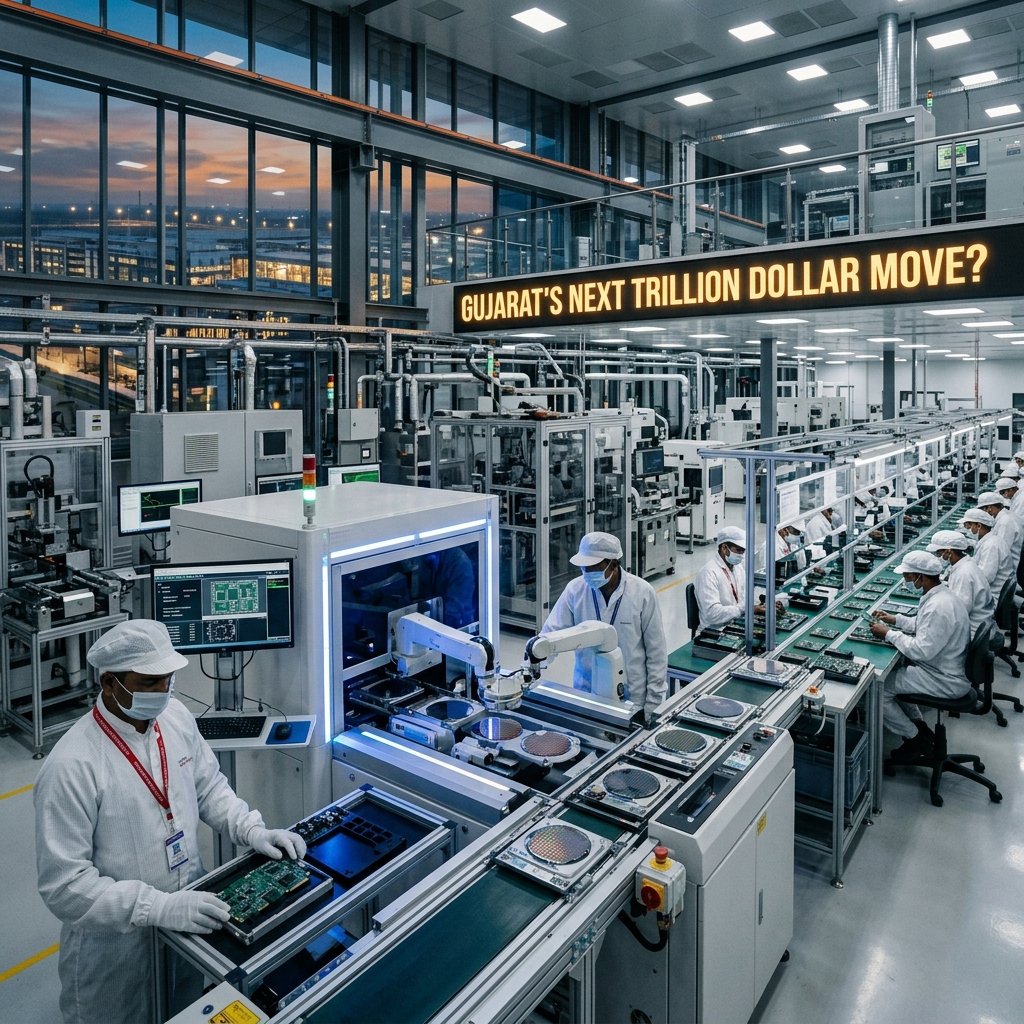
Gujarat Eyes Mobile Manufacturing Hub: New Policies & Subsidies Unveiled
👋 Welcome back to another deep dive into the booming business landscape of Gujarat!
If you’ve been following the tech space, you already know that Gujarat has been making headlines for its ambitious semiconductor projects. But wait, there is a brand new plot twist!
As of August 19, 2026, the Gujarat state government is officially evaluating massive strategies to transition the state from being just a semiconductor powerhouse to a full-fledged Mobile Phone Manufacturing Hub.
Let’s break down exactly what this means, the policies in play, and why this could be the state’s next trillion-dollar move! 🚀
🏭 The Foundation: A Semiconductor Juggernaut
Before we talk about smartphones, we have to look at the silicon that powers them. Over the last few years, Gujarat has systematically built one of the most robust semiconductor ecosystems in Asia.
Anchored by the landmark Gujarat Semiconductor Policy (2022–2027), the state has attracted investments that most regions can only dream of.
- Tata Electronics & PSMC: The mega fabrication plant in Dholera is setting a global benchmark.
- Micron Technology & CG Power: ATMP and OSAT facilities in Sanand are already changing the game.
- Kaynes Semicon: Adding massive value to the Sanand electronics cluster.
- Recent Approvals (May 2026): The Union Cabinet greenlit an integrated compound semiconductor facility by Crystal Matrix Limited in Dholera and an OSAT facility by Suchi Semicon Private Limited in Surat.
💡 Pro-Tip: A thriving semiconductor ecosystem is the absolute hardest part of building consumer electronics. By solving the chip problem first, Gujarat has essentially laid the red carpet for mobile manufacturers.
📱 The Big Pivot: Why Mobile Manufacturing?
So, why the sudden push for mobile phones? The logic is brilliantly simple.
Chips are the heart and soul of modern smartphones. Since Gujarat is already producing the chips, it makes perfect logistical and economic sense to assemble the phones right next door.
State officials recognize that the global supply chain is looking for resilience. By offering an end-to-end manufacturing solution—from silicon wafer to boxed smartphone—Gujarat can offer unprecedented turnaround times and reduced logistics costs for global giants like Apple, Samsung, and emerging domestic brands.
The transition from raw components to finished consumer goods is where massive job creation happens, and the state government knows it.
💰 The Policy Push: Subsidies on the Horizon
Here is where it gets incredibly lucrative for businesses and investors. As of mid-August 2026, the state government is exploring two highly aggressive incentive strategies.
1. A Dedicated State-Level Mobile Policy
Rumors are swirling about a bespoke mobile manufacturing policy. If it mirrors the success of the semiconductor framework, we can expect:
* Heavy Capital Subsidies: Potentially matching or exceeding the current 20% offered under the broader Electronics Policy.
* Land Rebates: Significant discounts on prime industrial land in designated tech zones.
* Utility Concessions: Heavily subsidized electricity and water tariffs, which are critical for large-scale assembly lines.
2. Aligning with the Union Government’s MPMS
The alternative (or perhaps complementary) strategy is to directly align state incentives with the central government’s Mobile Phone Manufacturing Scheme (MPMS).
By stacking state subsidies on top of central incentives, Gujarat could offer a financial package that makes it mathematically impossible for major manufacturers to look elsewhere.
💡 Pro-Tip: Keep an eye on the Gujarat Industrial Policy 2026 (introduced in June). Its flexible “Choose Your Incentive” framework is specifically designed to support advanced manufacturing and integration into global value chains. Handset makers will undoubtedly leverage this!
🏙️ Dholera and Sanand: The Twin Engines
If you want to know where the magic will happen, look no further than Dholera and Sanand.
Dholera Special Investment Region (DSIR)
Often dubbed “Semicon City,” Dholera is the crown jewel of Gujarat’s tech ambition.
* Plug-and-Play Infrastructure: Manufacturers don’t have to worry about the basics. Power, water, and roads are already world-class.
* Massive Scale: The sheer size of DSIR means mobile assembly plants can be built right next to the semiconductor fabs, creating a hyper-efficient micro-supply chain.
The Sanand Electronics Cluster
While Dholera handles the mega-fabs, Sanand is rapidly becoming the capital of packaging, testing, and assembly. With established logistics networks and proximity to Ahmedabad, Sanand is the perfect location for fast-moving consumer goods like smartphones.
🤝 What This Means for Businesses and Startups
This isn’t just news for mega-corporations. The ripple effect of a mobile manufacturing hub will create massive opportunities for SMEs and startups.
- Component Suppliers: Mobile phones require screens, batteries, casings, and camera modules. Local businesses that can supply these parts will see explosive growth.
- Logistics and Warehousing: Moving millions of phones requires state-of-of-the-art logistics, creating a boom in the warehousing sector.
- Software and Testing: Assembly requires rigorous quality control, software flashing, and testing—perfect niches for IT startups.
💡 Pro-Tip: If you are a startup in the supply chain or logistics sector, now is the time to set up shop near Dholera or Sanand. The early bird gets the contract!
🎓 Upskilling the Workforce: The Human Element
A massive manufacturing hub cannot run on robots alone (at least, not yet!). To support this ambitious pivot towards mobile phone manufacturing, the Gujarat government is also heavily investing in human capital.
The state has already begun partnering with premier engineering institutes and vocational training centers to introduce specialized courses in electronics assembly, quality assurance, and supply chain management.
- Skill Development Programs: We are seeing the rollout of targeted skill development initiatives aimed at training thousands of local youths. These programs are specifically tailored to meet the exacting standards of global smartphone brands.
- Industry-Academia Collaboration: Companies like Tata and Micron are actively working with universities to design curriculums that ensure graduates are job-ready from day one.
This focus on workforce development ensures that as the factories are built, there is a steady pipeline of skilled labor ready to operate them, making the state even more attractive to foreign investors.
🌱 Sustainability: Green Manufacturing
In 2026, you cannot talk about large-scale manufacturing without addressing environmental impact. Global smartphone brands are under immense pressure to reduce their carbon footprints and achieve net-zero emissions.
Gujarat is uniquely positioned to offer a “Green Manufacturing” advantage.
* Renewable Energy: The state is a leader in solar and wind power generation. Industrial zones like Dholera are being designed to draw a significant portion of their power from renewable sources.
* Water Management: Semiconductor and electronics manufacturing are notoriously water-intensive. Gujarat’s advanced desalination plants and wastewater recycling mandates ensure that these mega-factories operate sustainably without depleting local resources.
By offering access to green energy and sustainable infrastructure, Gujarat provides mobile manufacturers with a crucial edge in meeting their global ESG (Environmental, Social, and Governance) commitments.
🌍 The Global Perspective: Moving Beyond Borders
The global smartphone market is highly competitive, and the ongoing geopolitical shifts have forced major brands to adopt a “China Plus One” strategy. India has naturally emerged as the primary beneficiary of this shift.
However, within India, the competition between states is fierce. Tamil Nadu, Karnataka, and Uttar Pradesh have traditionally dominated mobile assembly.
Gujarat’s unique advantage is its backward integration. While other states are assembling phones with imported chips, Gujarat is aiming to build phones with local chips. This dramatically reduces reliance on international shipping and shields manufacturers from global supply chain shocks.
It is a bold, vertically integrated vision that could shift the entire center of gravity of India’s electronics export market.
🔮 Conclusion: A Trillion-Dollar Trajectory
The August 2026 developments make one thing abundantly clear: Gujarat is not resting on its semiconductor laurels.
By aggressively courting mobile manufacturers, aligning policies with central schemes, and leveraging the incredible infrastructure of Dholera and Sanand, the state is positioning itself as the undisputed king of Indian tech manufacturing.
Whether it becomes the “Next Trillion Dollar Move” remains to be seen, but the foundation is rock solid, the policies are progressive, and the momentum is undeniable.
Stay tuned, because the next smartphone you buy might just have a “Made in Gujarat” sticker on the back! 🇮🇳✨