 mehul.pattel
Gujarat Weather Update: Sporadic Rainfall Raises Concerns for Agriculture Sector While Rest of India Gets Soaked 🌧️📉
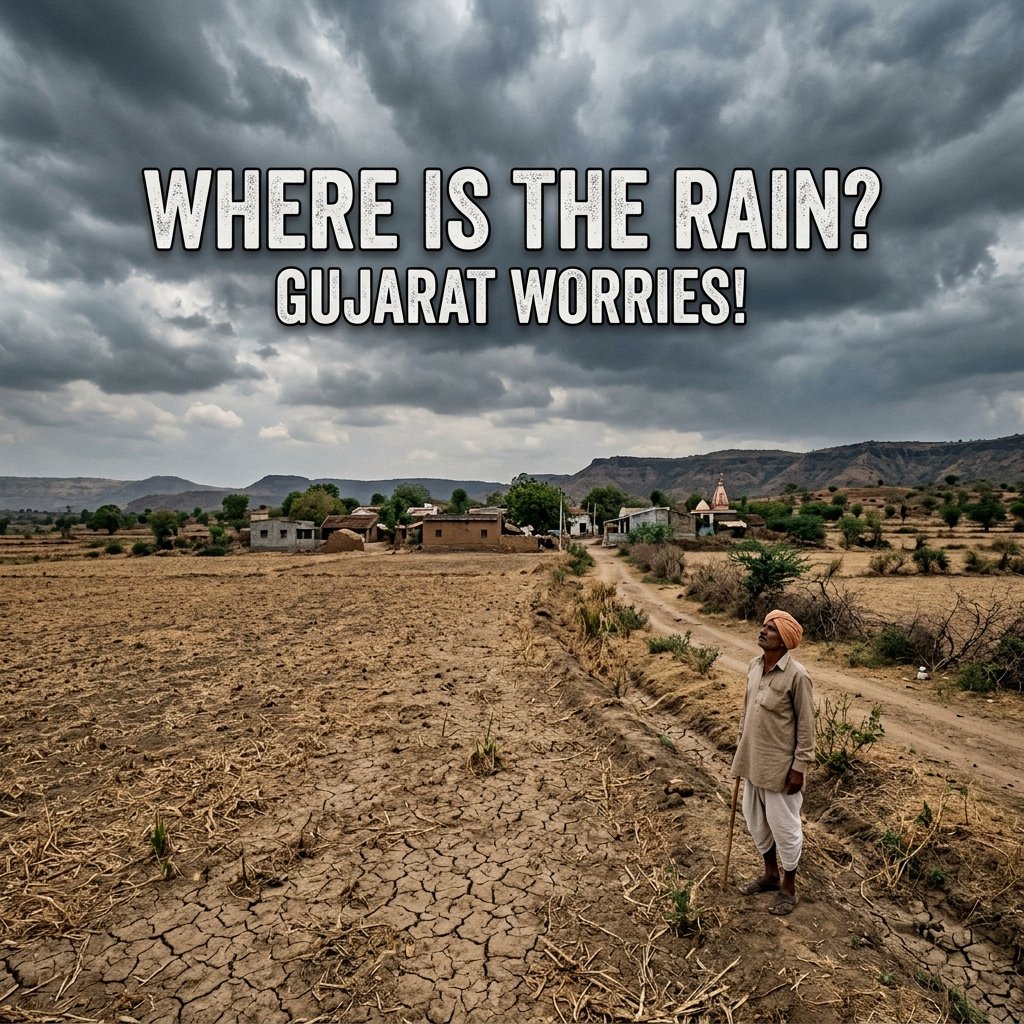
The monsoon of 2026 has been a tale of two extremes for India. While heavy rains continue to batter several states across the country, Gujarat finds itself in a precarious situation. As of August 19, 2026, the state is experiencing only light to moderate, sporadic rainfall. This stark contrast is raising serious alarms for the local agriculture sector, which heavily depends on robust monsoon showers during this critical period. 🚜🌾
The Current Weather Landscape in Gujarat 🌥️
Despite the active monsoon trough bringing torrential downpours to neighboring states, Gujarat’s weather map presents a surprisingly calm, albeit worrying, picture. The India Meteorological Department (IMD) has maintained a rather subdued forecast for the region.
No Heavy Rain Warnings: Unlike the red and orange alerts flashing across other parts of India, there are currently no major warnings for heavy or “musaldhar” (torrential) rain in Gujarat for today or the immediate coming days. This absence of intense rainfall is a major talking point among local communities and meteorologists alike.
Overcast skies but little action: The atmosphere across most of the state is characterized by overcast skies. Dark, heavy clouds frequently gather, offering the promise of a downpour, but mostly result in brief, passing spells of rain. This teasing weather pattern is proving frustrating for farmers who need substantial moisture for their crops.
Regional Breakdown: Where is the Rain Falling? 🗺️💧
While the overall picture is one of deficit compared to the national average, the distribution of rainfall within Gujarat is notably uneven. Let’s break down the regional outlook for August 19, 2026:
South Gujarat: A Glimmer of Hope? 🌱
South Gujarat remains the most likely region to receive some meaningful precipitation. Districts such as:
* Surat
* Navsari
* Valsad
* Tapi
* Dang
These areas have been highlighted by weather models for potential light to moderate showers. However, even here, the intensity is far from what is typically expected during a robust monsoon phase.
Saurashtra, North, and Central Gujarat: Parched and Waiting 🏜️
The situation is more concerning in Saurashtra, North, and Central Gujarat. These regions are seeing very light, sporadic rain activity. The showers are highly localized, meaning one village might get a quick drizzle while the neighboring one remains completely dry.
Temperatures Holding Steady: Despite the lack of heavy rain, the cloud cover is keeping temperatures somewhat in check. Cities like Ahmedabad and Gandhinagar are reporting daytime temperatures hovering comfortably around the 30°C to 33°C mark. However, the high humidity combined with the lack of cooling showers makes the weather feel quite muggy.
The Deepening Agricultural Crisis 🧑🌾⚠️
The erratic and insufficient rainfall in August is a massive blow to the agricultural backbone of Gujarat. August is a make-or-break month for Kharif crops (monsoon crops), and the current weather pattern is spelling trouble.
Impact on Key Crops:
* Cotton and Groundnut: These two major cash crops in Saurashtra and Central Gujarat are at a crucial vegetative or flowering stage. Insufficient moisture now can severely stunt growth and drastically reduce yields.
* Paddy: In South and Central Gujarat, paddy cultivation requires standing water. The sporadic showers are barely enough to keep the soil moist, let alone maintain the necessary water levels in the fields.
[!TIP]
Pro-Tip for Farmers: Agricultural experts advise adopting moisture conservation techniques immediately. Mulching and micro-irrigation (wherever possible) can help sustain crops through these dry spells. Avoid applying heavy chemical fertilizers during this water-stressed period, as it can burn the crops.
Why is Gujarat Missing Out? 🔍🌫️
Meteorologists point to a combination of factors for this dry spell:
1. Weakening of the Monsoon Trough over the Region: The primary monsoon trough, which brings rain-bearing clouds, has shifted slightly, favoring Central and Northern India more than the western coast.
2. Lack of Strong Low-Pressure Systems: There are currently no strong low-pressure areas or cyclonic circulations in the Arabian Sea near the Gujarat coast that could pull in substantial moisture.
3. Wind Patterns: Prevailing wind patterns are currently not conducive to bringing heavy moisture laden clouds deep inland into Gujarat.
The Ripple Effect: Beyond the Fields 🏙️💧
The impact of this sporadic rainfall extends beyond the agricultural sector.
Reservoir Levels: While earlier rains might have brought some water into the dams, a prolonged dry spell in August means reservoir levels are not rising as expected. This could have implications for drinking water supply and irrigation later in the year if the situation doesn’t improve.
Economic Concerns: A poor harvest directly translates to reduced rural income, which in turn affects the broader state economy. Markets relying on agricultural produce anticipate lower volumes and potential price fluctuations.
Looking Ahead: Will the Skies Open Up? 🔭🔮
The immediate forecast does not show a dramatic shift. The IMD predicts continued overcast conditions with only intermittent light rain for the next few days.
However, the monsoon is notoriously unpredictable. Farmers and citizens alike are keeping a close eye on the skies and weather bulletins, hoping for the formation of a favorable weather system in the Bay of Bengal or the Arabian Sea that might bring the much-needed deluge.
What to do in the meantime:
* Stay updated with local weather advisories.
* Practice water conservation at home and in industries.
* Support local farmers through these challenging times.
The contrast is stark: while rivers overflow elsewhere, Gujarat waits for a generous shower. The coming weeks will be critical in determining the final outcome of the 2026 monsoon for the state.
A Historical Perspective: Is This Normal? 📊🕰️
To understand the current situation, it is helpful to look at Gujarat’s monsoon history. The state is no stranger to erratic rainfall patterns. Its geographical location makes it susceptible to both severe droughts and devastating floods.
However, a prolonged dry spell in the middle of August, precisely when the monsoon should be at its peak, is always a cause for elevated concern. In previous years where August failed to deliver, the overall agricultural output saw significant dips, leading to state interventions and relief packages.
The contrast this year is particularly sharp because of the national context. Seeing news reports of deluges in Delhi, Maharashtra, and parts of the South, while standing in dry fields in Rajkot or Mehsana, creates a sense of unease. It highlights the vast micro-climatic variations within the Indian subcontinent.
Voices from the Ground 🗣️🚜
Speaking to local farmers paints a vivid picture of the anxiety. “We prepared the fields, sowed the seeds right on time after the first good showers in July,” says Ramesh Patel, a cotton farmer from Surendranagar. “But since then, it’s just been a teasing game. The clouds come, it gets dark, we prepare for rain, and then… nothing but a light drizzle. If we don’t get a good soaking rain in the next week, my entire investment for this season is at risk.”
This sentiment is echoed across the state. The agriculture department is reportedly monitoring the situation closely and preparing contingency plans. These might include advisories for alternative, short-duration crops if the dry spell continues, or plans for supplementary irrigation where canal networks exist.
The Broader Environmental Context 🌍🌡️
Some environmentalists are also pointing to the broader context of climate change. While it is difficult to attribute a single weather event directly to global warming, the increasing frequency of erratic weather patterns – prolonged dry spells interspersed with sudden, extreme downpours – is consistent with climate models.
This underscores the need for long-term strategies in Gujarat’s agriculture, including the development of more drought-resistant crop varieties and more efficient water management systems. The state has made significant strides with projects like the Sardar Sarovar Dam and the SAUNI Yojana, but local-level water harvesting and conservation remain equally crucial.
Conclusion 🌅
August 19, 2026, serves as a stark reminder of the vulnerability of agriculture to the whims of the weather. As Gujarat looks up at the cloudy but dry skies, the hope remains that the monsoon will soon pivot and bring the life-sustaining rains the state so desperately needs. Until then, it is a waiting game, fraught with worry for the farmers and the economy that depends on them. Let us all hope for a swift change in the weather patterns in the coming days, ensuring that the fields of Gujarat receive the nourishment they require to thrive.