
 mehul.pattel
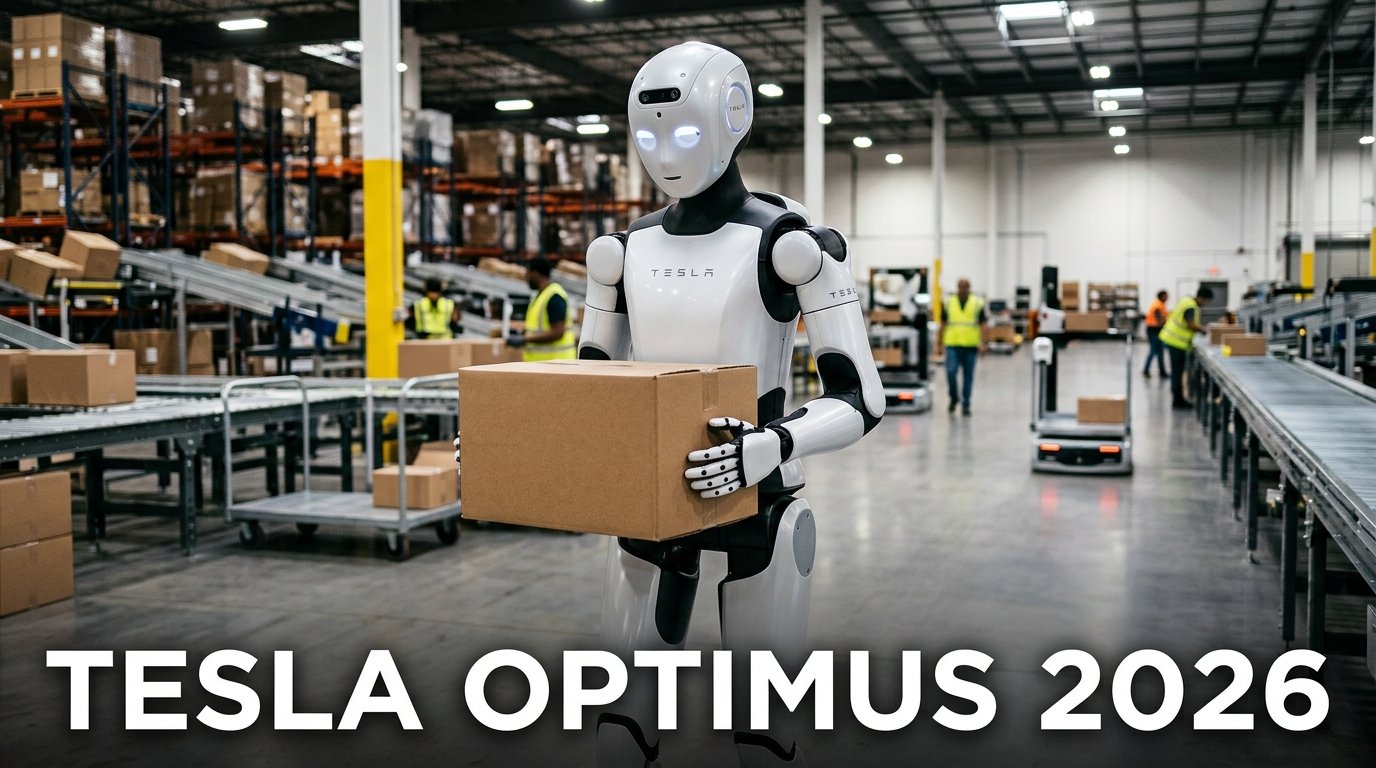
Tesla Optimus Gen 4: Humanoid Robots Enter the Everyday Workforce
When Elon Musk first announced the Tesla Bot in 2021 with a human dancer in a spandex suit, industry experts and the public alike viewed it as a highly ambitious, perhaps even comical, publicity stunt. Fast forward to 2026, and the laughter has completely stopped. With the official rollout of the Tesla Optimus Gen 4, the era of humanoid robots working alongside humans in everyday environments has officially begun.
This is no longer a research project confined to highly controlled laboratory environments. In 2026, thousands of Optimus units have been deployed not just in Tesla’s own Gigafactories, but in Amazon fulfillment centers, major retail backrooms, and even select hospital supply chains. Here is an in-depth look at the technology, the economics, and the societal impact of the world’s first mass-produced humanoid worker.
The Technology: Beyond Basic Automation
The leap from Optimus Gen 2 to Gen 4 has been staggering, driven primarily by exponential advancements in Tesla’s full self-driving (FSD) AI architecture, which has been adapted from their cars to the robot’s “brain.”
1. Advanced Tactile Hands and Dexterity
The most significant hardware upgrade is the robotic hands. Gen 4 features 22 degrees of freedom in each hand, embedded with highly sensitive tactile sensors. Optimus can now seamlessly transition from carrying a 45-pound crate of machine parts to delicately picking up a fragile glass beaker or a soft piece of fruit without crushing it. This level of dexterity was previously thought to be decades away.
2. Visual-Language AI Integration
Optimus Gen 4 does not need to be hard-coded with specific, rigid instructions (like “move arm 45 degrees left”). Instead, it uses advanced Visual-Language Models (VLMs). A warehouse manager can simply point to a chaotic pile of mixed inventory and say, “Sort the electronics into the blue bins and the textiles into the red bins, and let me know if any boxes are damaged.” The robot processes the visual scene, understands the complex natural language command, and executes the task autonomously.
3. Bi-Pedal Stability and Battery Life
Walking on two legs is notoriously difficult for robots. However, Gen 4 utilizes dynamic balancing algorithms that allow it to walk over uneven terrain, step over cables, and recover instantly if accidentally bumped by a human worker. Powered by a custom 3.5 kWh structural battery pack in its torso, it can work a standard 8-hour shift on a single charge.
The Economics: Why Companies Are Buying Them
The math behind the Optimus Gen 4 deployment is undeniable. In 2026, Tesla managed to bring the manufacturing cost down to roughly $22,000 per unit, allowing them to lease the robots to enterprise customers for approximately $5 to $7 per hour of operation.
When compared to the fully-loaded cost of a human warehouse worker (including wages, healthcare benefits, insurance, and turnover costs), the financial incentive for corporations is massive. Optimus does not take coffee breaks, does not get injured by heavy lifting, and can work 24/7 in three shifts. While the upfront integration requires capital, the Return on Investment (ROI) is currently averaging just 14 months for major logistics companies.
The Societal Impact: A Double-Edged Sword
The mass deployment of humanoid robots in 2026 has sparked intense global debate. On one hand, Optimus is taking over the “three Ds” of labor: tasks that are Dull, Dirty, and Dangerous. Ergonomic injuries in warehouses utilizing Optimus have plummeted by 40% in just six months, as humans are moved to supervisory and quality-control roles.
On the other hand, labor unions are sounding the alarm. While Optimus currently handles repetitive physical labor, its rapid AI learning curve means it is quickly moving up the value chain. There are growing concerns about the displacement of millions of blue-collar workers globally, prompting renewed political discussions around automation taxes and universal basic income (UBI).
Conclusion
The Tesla Optimus Gen 4 is not a science fiction concept of the distant future; it is a reality walking among us in 2026. By successfully combining advanced AI software with mass-manufacturing hardware capabilities, Tesla has created a general-purpose worker that will fundamentally restructure the global supply chain. We are at the very beginning of the humanoid robotics age, and the world is about to change faster than anyone anticipated.
Frequently Asked Questions (FAQs)
Q1: Can I buy a Tesla Optimus for my home?
A: Not yet. In 2026, Tesla is strictly prioritizing B2B (business-to-business) enterprise leasing for industrial, logistics, and healthcare applications. Elon Musk has stated that a consumer version capable of cooking and cleaning is in development, but it is likely 3 to 5 years away.
Q2: Is the robot safe to work around?
A: Yes. Optimus is designed with a “passive safety” architecture. It weighs only 130 lbs (59 kg) and its actuators are electronically speed-limited. In the event of a system failure, it simply goes limp and falls over, rather than exerting dangerous force. It also features multiple physical kill switches.
Q3: How does it learn new tasks?
A: Optimus uses a combination of teleoperation (where a human controls it in VR to demonstrate a task) and fleet-wide reinforcement learning. Once one Optimus learns how to fold a specific type of box or navigate a new obstacle, that neural network update is pushed to the entire global fleet overnight.
Q4: Will robots completely replace human physical labor?
A: In the short term, no. Highly complex physical tasks requiring human intuition, nuanced troubleshooting, and fine tradesmanship (like plumbing or complex electrical work) remain far beyond the capabilities of Gen 4. Optimus excels at repetitive, predictable physical tasks.