 mehul.pattel
US VS IRAN: The Most Crushing Economic Operation Ever Declared! 🚨
The world has witnessed a historic and unprecedented escalation. In August 2026, U.S. President Donald Trump dropped a geopolitical bombshell, declaring the launch of what he termed the “most crushing economic operation ever taken against any country.” The target? Iran. The ripple effects? A potential global crisis affecting everything from international diplomacy to the fuel in your car. 🌍⛽
This is not just another political headline; this is a seismic shift in global relations, trade, and economic stability. As the Strait of Hormuz becomes a chokepoint of international tension, the global markets are reacting with fear and uncertainty.
💥 The Announcement That Shook the World
On August 19, 2026, the rhetoric surrounding the long-standing US-Iran conflict transformed into immediate, heavy-handed action. Taking to Truth Social, President Trump did not mince words. He characterized the new initiative as “Economic Warfare and Isolation on an unprecedented scale.” 🦅
“We are launching the most crushing economic operation ever taken against any country. Any nation, financial institution, or business that provides a lifeline to Iran will face TREMENDOUS Economic Consequences.” – President Donald Trump
This stark warning serves as a global ultimatum. The message is clear: if you do business with Iran, you do not do business with the United States.
What Does the Operation Entail?
The operation aims to completely severe Iran’s economic arteries. It specifically targets:
* Oil Smuggling: Cutting off the illicit trade of crude oil that funds the Iranian regime. 🛢️
* Swap Lines and Cash Transfers: Freezing all financial avenues and international monetary exchanges involving Iran. 💰
* Ship Registries: Going after the flags of convenience used by Iranian vessels to bypass international sanctions. 🚢
This is a comprehensive, airtight economic blockade. It is designed to squeeze the Iranian economy until the political leadership succumbs to US demands, or faces internal collapse.
🌊 The Strait of Hormuz: A Chokepoint in Crisis
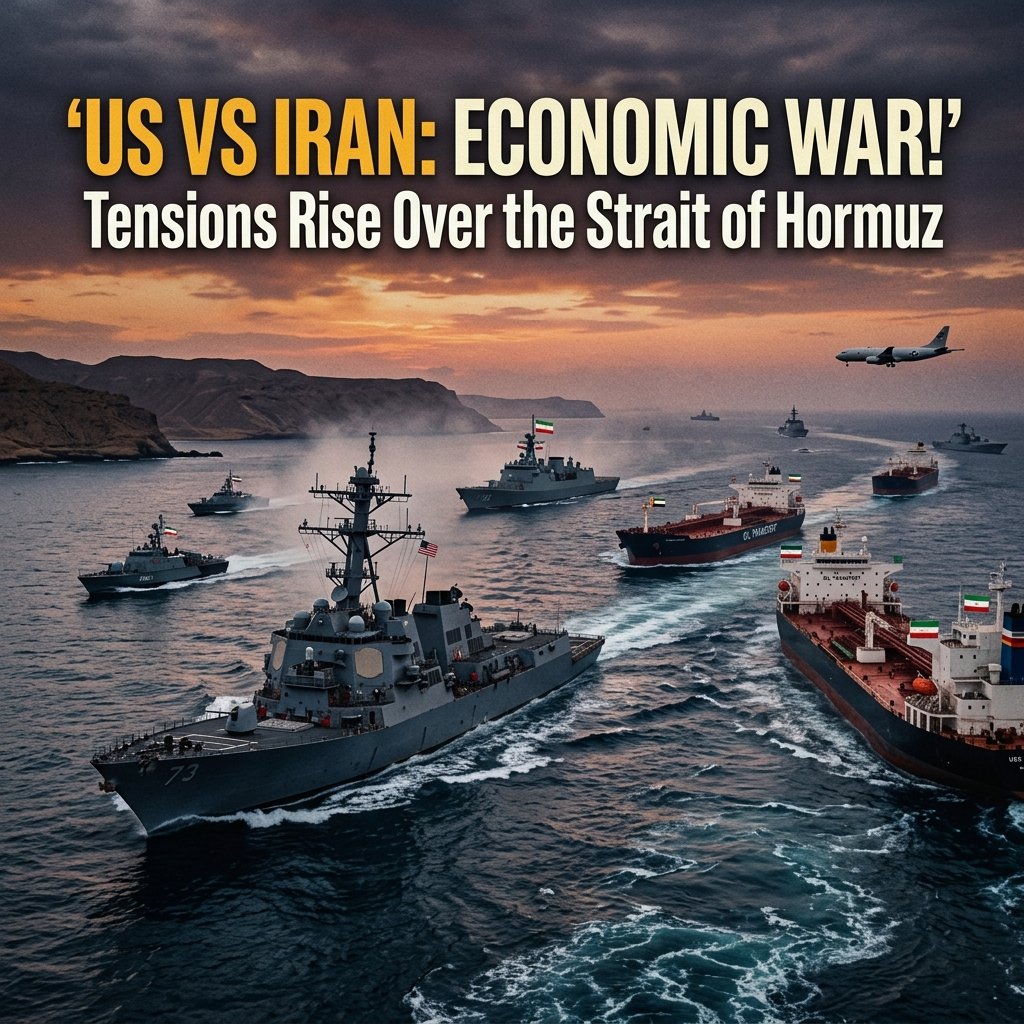
The Strait of Hormuz is the world’s most critical oil transit chokepoint. Located between Oman and Iran, it connects the Persian Gulf with the Gulf of Oman and the Arabian Sea. Approximately 20% of the world’s global oil consumption passes through this narrow waterway.
Right now, the Strait of Hormuz is effectively choked off. 🛑
A Standoff of Claims
The situation in the Strait is highly volatile and fraught with conflicting narratives:
* The US Position: President Trump insists that the Strait remains open and is firmly under the control and protection of the United States and its allies. 🇺🇸
* The Iranian Position: Conversely, Iranian officials claim complete sovereignty and control over the waterway, threatening that it will remain closed until their demands—primarily the lifting of the crippling blockades and sanctions—are met. 🇮🇷
As a result of this standoff, commercial shipping traffic has plummeted to near-historic lows. Tanker captains are terrified. Insurance premiums for vessels traversing the region have skyrocketed. The physical and economic risks are simply too high for many shipping companies to bear. 📉
🛢️ Global Oil Prices on Fire
When the Strait of Hormuz sneezes, the global oil market catches a severe cold. And right now, the Strait is experiencing a massive geopolitical fever. 🤒
The immediate consequence of this “crushing economic operation” and the bottleneck in the Strait of Hormuz is a dramatic spike in global oil prices.
The fear of supply disruption is the primary driver. With 20% of the world’s oil supply under threat, speculators and markets are reacting aggressively.
The Domino Effect on the Economy
The surging cost of crude oil doesn’t just affect the price at the pump; it acts as a tax on the entire global economy. 💸
* Transportation Costs: Airlines, freight companies, and everyday commuters are facing soaring fuel expenses. ✈️🚛
* Inflationary Pressures: Higher energy costs lead to higher prices for manufactured goods, agricultural products, and retail items, driving up inflation globally. 🛒
* Economic Slowdown: Developing nations that rely heavily on oil imports are particularly vulnerable, facing potential economic stagnation or recession. 📉
The “economic war” is not confined to the borders of the US and Iran; its casualties include consumers and businesses worldwide.
🧨 The Geopolitical Domino Effect
This economic operation did not happen in a vacuum. It is the culmination of months of escalating tensions and failed diplomacy.
The U.S.-Iran conflict has now entered its sixth month, and the off-ramps are disappearing rapidly.
The Failure of the 60-Day MoU
Earlier this week, a 60-day negotiating period established under a memorandum of understanding (MoU) expired. The goal was to find a diplomatic resolution to the crisis. Instead, the deadline passed without a deal, paving the way for Trump’s draconian economic measures. 🕰️
Regional Friction: Missiles and Accusations
The tension is spilling over into neighboring countries. In a deeply alarming development, the United Arab Emirates (UAE) recently accused Iran of firing ballistic missiles toward its territory. This accusation drastically raises the stakes, transforming an economic conflict into a potential military conflagration in the Middle East. 🚀
The Shadow of the 2026 Elections
Domestic politics play a crucial role. As the November 2026 U.S. elections approach, President Trump is facing political pressure regarding the costs and outcomes of this conflict. A swift, decisive victory—even an economic one—could bolster his standing, while a protracted, painful crisis could have serious electoral consequences. 🗳️
🔮 What Happens Next?
The world is holding its breath. The declaration of the “most crushing economic operation ever” is a point of no return.
Iran is backed into a corner, facing severe domestic hardship and international isolation. The United States has committed to a policy of maximum pressure, with its credibility on the line.
Will Iran capitulate? Will they escalate further, perhaps by fully closing the Strait of Hormuz or launching military strikes? Will the international community intervene?
One thing is certain: the events of August 2026 will be recorded as a critical turning point in modern geopolitics. The economic war has begun, and the fallout will be felt by every nation, every market, and every consumer for years to come. Stay tuned as this historic crisis unfolds. 🌐
🚢 Deeper Dive into Shipping and Supply Chains
The ramifications for global shipping extend far beyond just oil tankers. The entire ecosystem of maritime trade in the Middle East is facing an unprecedented crisis.
Container ships carrying everything from electronics to grain are being forced to reroute. These new routes, often around the Cape of Good Hope, add weeks to delivery times and millions of dollars in fuel and operational costs. The global supply chain, still recovering from the shocks of the early 2020s, is once again being stretched to its absolute limits. 📦
The Insurance Nightmare
Marine insurance companies are in a state of panic. The Persian Gulf and the Gulf of Oman have been designated as high-risk areas. War risk premiums have jumped by hundreds of percent overnight. For many smaller shipping operators, the cost of insurance alone makes the journey economically unviable, further reducing the number of vessels willing to brave the region. 📑
🏛️ International Reactions and the Path Forward
The international community’s response has been one of deep concern and frantic diplomatic activity.
* European Allies: Traditional U.S. allies in Europe are caught in the middle, deeply worried about the economic fallout of soaring energy prices while trying to maintain solidarity. 🇪🇺
* Asian Markets: Powerhouses like China and India, massive consumers of Middle Eastern oil, are scrambling to secure alternative energy sources and stabilize their markets. 🇨🇳🇮🇳
The coming weeks will be critical. The “most crushing economic operation ever” is a high-stakes gamble. If it succeeds in bringing Iran to the negotiating table without sparking a regional war, it will be hailed as a masterstroke. If it fails, the consequences—both economic and human—could be catastrophic.
As August 2026 draws to a close, the Strait of Hormuz remains the epicenter of a geopolitical earthquake, and the tremors are being felt across the globe. 🌍