
 mehul.pattel
150 Years of Vande Mataram: A Historic First at the Red Fort Independence Day Celebrations
Every year, the Independence Day celebrations at the Red Fort are a spectacle of military precision, cultural diversity, and national pride. However, the 80th Independence Day on August 15, 2026, etched a deeply emotional and unprecedented moment into the annals of Indian history. For the very first time, the national song, ‘Vande Mataram’, was officially performed at the Red Fort ceremonies, marking a spectacular tribute to its 150th anniversary.
The decision to include the iconic song, composed by Bankim Chandra Chatterjee in the 1870s, transformed the traditional state function into a deeply moving cultural homage. Here is an inside look at how this historic performance came together and why it resonated so powerfully across the nation.
The Performance: 5,000 Voices Uniting
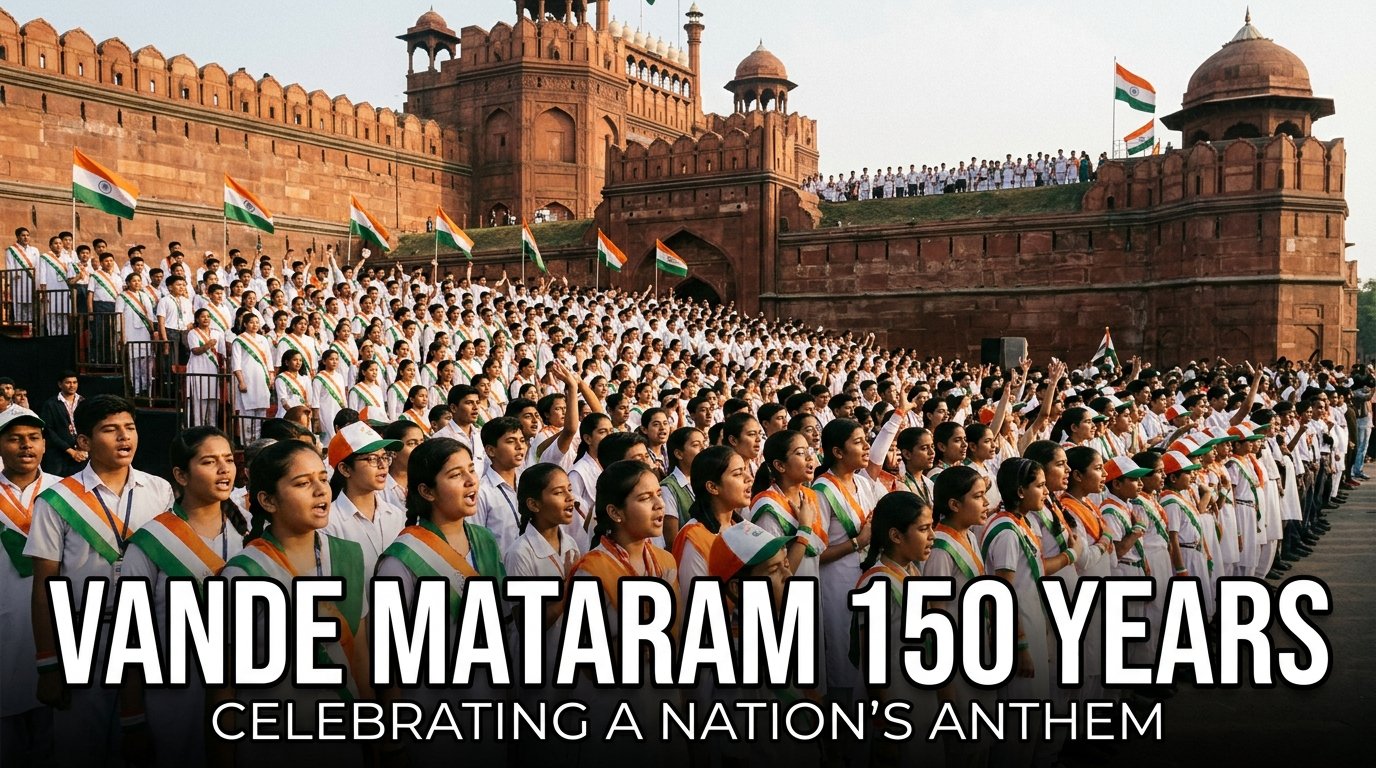
As the Prime Minister concluded his address to the nation, the usual protocol of a military band march was briefly paused. In its place, a massive choir consisting of 5,000 students from various schools across the Delhi-NCR region took the center stage on the lawns of the Red Fort.
Dressed in pristine white kurtas with vibrant saffron and green dupattas, the students delivered a spine-tingling, synchronized rendition of the first two stanzas of ‘Vande Mataram’. The performance was entirely a cappella for the first minute, relying purely on the raw acoustic power of the thousands of young voices, before the military brass band gently joined in for a sweeping, cinematic crescendo.
Witnesses noted that the sheer scale and passion of the performance moved many dignitaries and veterans in the audience to tears.
The History: 150 Years of a Battle Cry
To understand the significance of this moment, one must look back at the origins of the song. Written in Sanskritized Bengali by Bankim Chandra Chatterjee (and later included in his 1882 novel Anandamath), ‘Vande Mataram’ (I bow to thee, Mother) was much more than a poem; it was the ultimate battle cry of the Indian independence movement.
- The Swadeshi Movement: The song gained immense popularity during the 1905 partition of Bengal, where it was sung in defiance of British colonial rule.
- Banned by the British: The phrase became so powerful that the British government banned its public chanting, leading to the arrest of countless freedom fighters who shouted it as they went to prison.
- National Song Status: While ‘Jana Gana Mana’ was adopted as the National Anthem, ‘Vande Mataram’ was given the equal status of the National Song by the Constituent Assembly in 1950, acknowledging its unparalleled role in the freedom struggle.
Why Now? The 2026 Significance
While 2026 marks the 80th year of Independence, it also broadly aligns with the 150th anniversary of the song’s conception. The government chose this specific Independence Day to introduce the performance to bridge the gap between the historical freedom struggle and the youth of today (‘Yuva Shakti’).
“It is vital that the generation driving us towards a ‘Viksit Bharat’ in 2047 understands the profound emotional and spiritual roots of our freedom,” noted a senior official from the Ministry of Culture, who helped organize the choir.
Conclusion
The inclusion of ‘Vande Mataram’ at the Red Fort is more than just a ceremonial update; it is a powerful reaffirmation of India’s cultural identity. As the final notes of the song echoed against the red sandstone walls on the morning of August 15, 2026, it wasn’t just a choir singing; it was the reverberation of 150 years of resilience, sacrifice, and an enduring love for the motherland.
Frequently Asked Questions (FAQs)
Q1: Who wrote Vande Mataram?
A: ‘Vande Mataram’ was written by the renowned Bengali author and poet Bankim Chandra Chatterjee in the 1870s.
Q2: What is the difference between a National Anthem and a National Song?
A: In India, ‘Jana Gana Mana’ is the National Anthem, meant for official state protocols and ceremonies. ‘Vande Mataram’ is the National Song, holding an equal constitutional status but historically celebrated for its deep emotional and inspirational connection to the freedom movement.
Q3: Has Vande Mataram never been sung at the Red Fort before?
A: While it may have been chanted by crowds or played by bands informally, August 15, 2026, marked the very first time it was scheduled as an official, large-scale choral performance as part of the formal Independence Day itinerary.
Q4: Where can I watch the performance?
A: The full performance was broadcast live on Doordarshan and is currently trending across all major news channels and YouTube, with millions of views globally.