 mehul.pattel
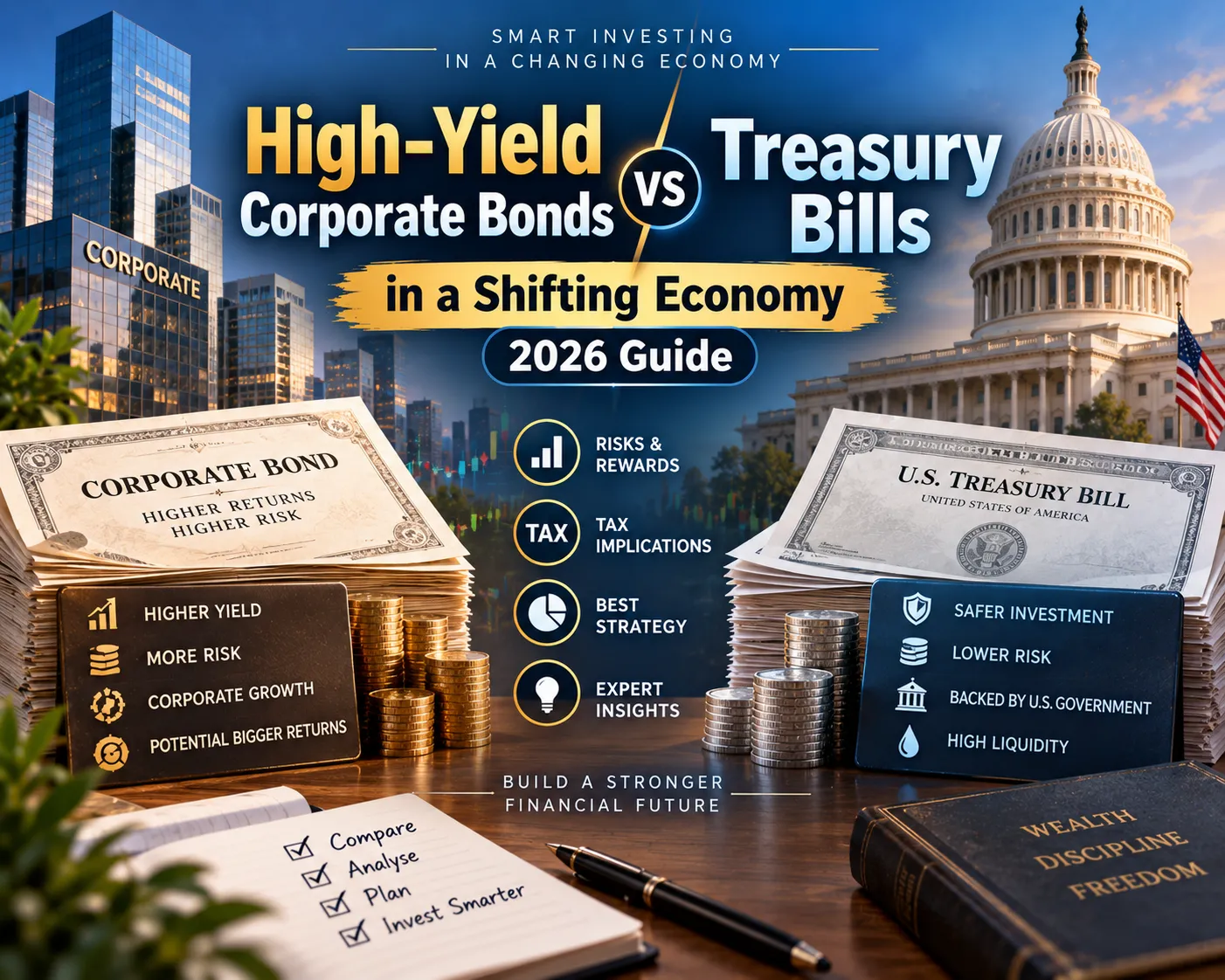
As the global economy faces major shifts in 2026, fixed-income investors are at a crossroads. Should you lock in the safety of Treasury Bills (T-Bills), or seek the lucrative returns of High-Yield Corporate Bonds? This comprehensive guide breaks down the risks, rewards, and tax implications of both assets to help you optimize your portfolio.
📋 Table of Contents
🏛️ 1. Treasury Bills: The Ultimate Safe Haven
Treasury Bills are short-term debt obligations backed entirely by the U.S. government. Because a government default is practically impossible, T-Bills are considered a “risk-free” investment. In 2026, as interest rates fluctuate, T-Bills continue to offer a stable and highly liquid place to park your cash for 3 to 12 months.
🌟 Pro Tip: T-Bills are sold at a discount to their face value. The difference between what you pay today and what you receive at maturity is your guaranteed profit.
💼 2. High-Yield Corporate Bonds Explained
On the other side of the spectrum are High-Yield Corporate Bonds. Companies issue these bonds to raise capital. Because businesses can—and do—go bankrupt, they must offer significantly higher interest rates to attract investors. While the payouts can be massive, you are taking on real credit risk.
⚖️ 3. Crucial Tax Implications
It’s not just about what you make; it’s about what you keep. Interest earned from corporate bonds is fully taxable at both the federal and state levels. However, interest from Treasury Bills is exempt from state and local taxes, making T-Bills extremely attractive for investors living in high-tax states.
🏢 Highlight: Always calculate the “Tax-Equivalent Yield” before making a decision. A 5% T-Bill might actually put more cash in your pocket than a 6.5% Corporate Bond after state taxes are deducted.
🎯 4. Best Strategy for a Shifting Economy
If economic indicators point toward a recession, default rates on corporate bonds will rise. In this scenario, fleeing to the safety of T-Bills is the smartest move. Conversely, if the economy is booming, allocating a small percentage of your portfolio to a diversified High-Yield Corporate Bond ETF can significantly boost your overall returns.
Ready to optimize your portfolio? 🚀
Take action today. Assess your current risk tolerance, consult with a certified financial planner, and balance your fixed-income investments to protect your wealth in 2026.